Where the Himalayas meet devotion — discover the sacred heritage, traditions and extraordinary landscape surrounding one of India's most revered Shiva pilgrimage sites.
Discover Kedarnath Explore Sacred Source
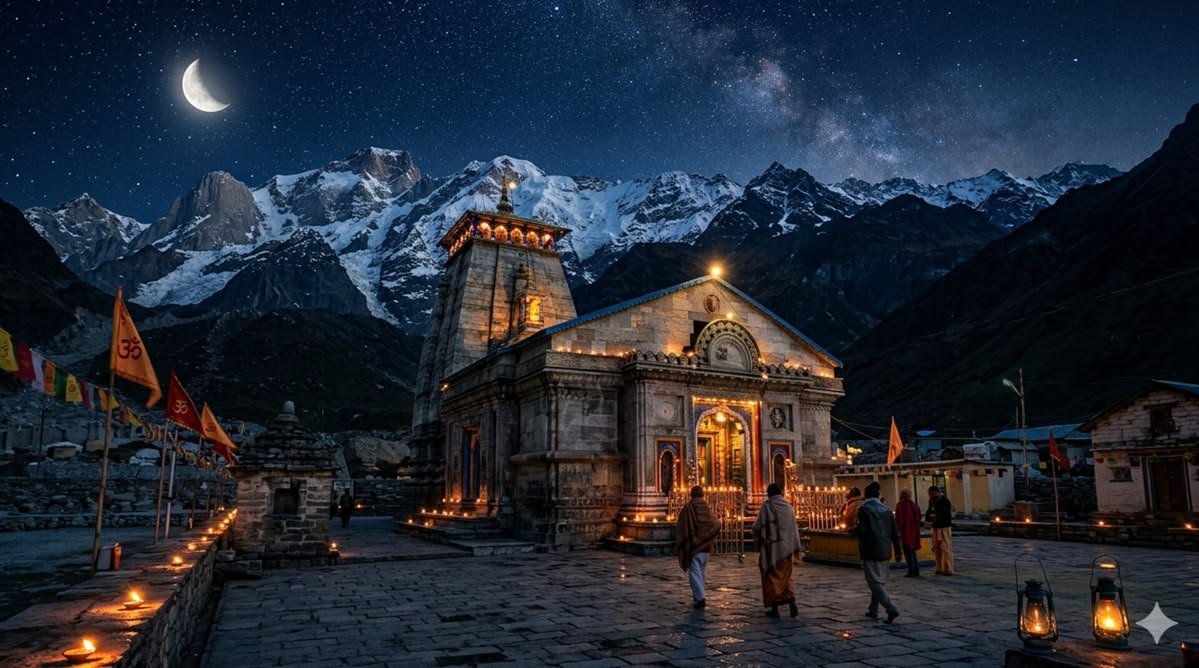
Kedarnath is a revered pilgrimage town situated high in the Garhwal Himalayas of Uttarakhand. At its heart stands the ancient Kedarnath Temple, dedicated to Lord Shiva.
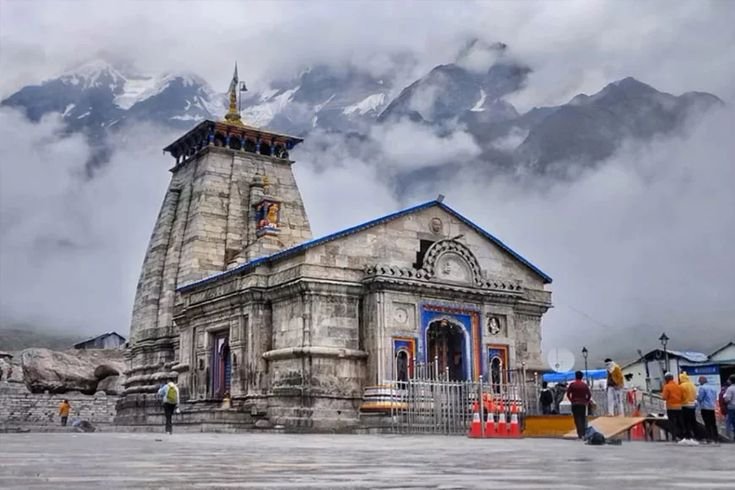
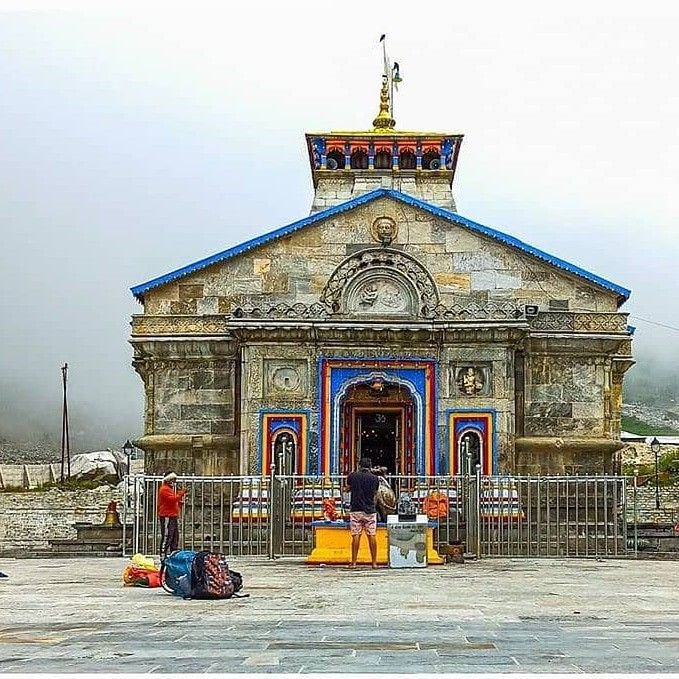
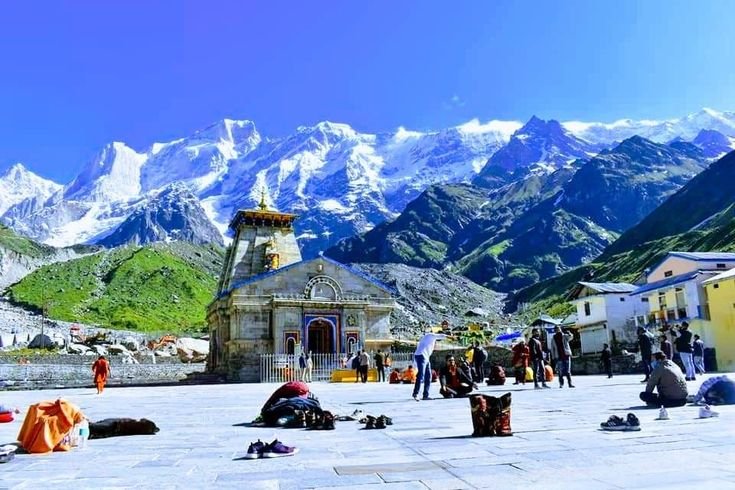
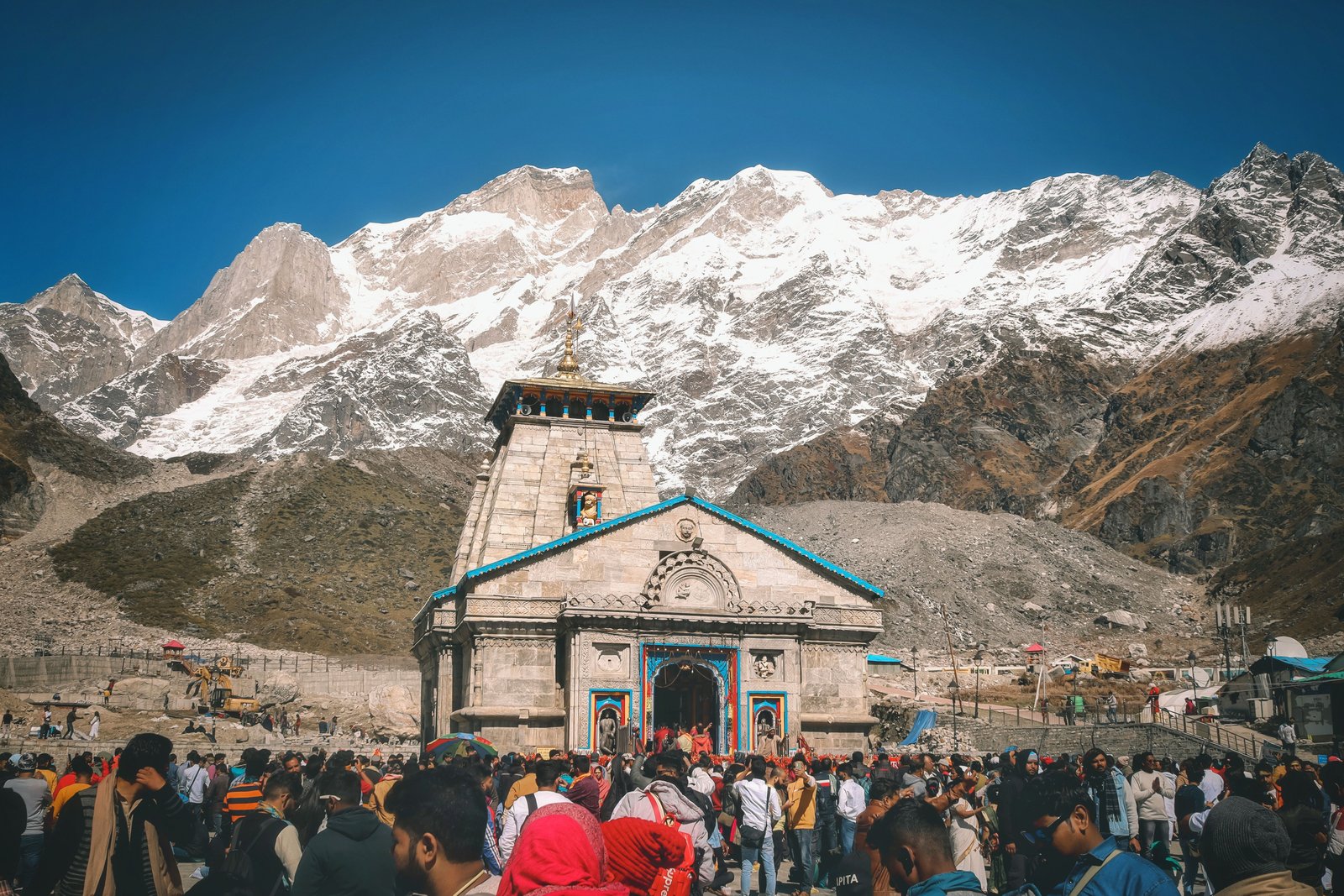
The temple is built from large, evenly shaped grey stone slabs and stands against the dramatic backdrop of the Kedarnath Peak, Kedar Dome and surrounding Himalayan ranges.
Kedarnath forms part of the Char Dham pilgrimage circuit of Uttarakhand and is also traditionally revered as one of the twelve Jyotirlingas of Lord Shiva.
For SanatanDivya, Kedarnath represents more than a destination. It is a place where landscape, pilgrimage, devotion and living tradition meet.
District in Uttarakhand, India
Approximate elevation of Kedarnath town
Presiding deity of Kedarnath Temple
One of Uttarakhand's four sacred pilgrimage sites
The Kedarnath Temple is distinguished by its massive stone construction and its extraordinary Himalayan setting.
Inside the temple, a distinctive conical stone form is worshipped as Lord Shiva in the Sadashiva form. A statue of Nandi, the sacred bull associated with Lord Shiva, faces the temple's main entrance.
The Kedarnath region is closely connected with the Mandakini River. Uttarakhand Tourism identifies the Chorabari Glacier near Kedarnath as the source of the Mandakini.
The river flows through the Himalayan landscape and forms an important part of the natural and cultural identity of the region.
The journey to Kedarnath is itself an important part of the pilgrimage experience.
The traditional approach to the shrine begins from Gaurikund and continues through the Himalayan landscape toward Kedarnath.
The route, high altitude and changing mountain conditions make the pilgrimage physically demanding, while the surrounding landscape gives the journey a distinctive spiritual character.
Pilgrims visit Kedarnath to offer prayers to Lord Shiva and experience one of the most significant sacred landscapes of the Himalayas.
According to a traditional Hindu legend, the Pandavas sought Lord Shiva after the Mahabharata war. Shiva is said to have taken the form of a bull and attempted to evade them.
In the traditional account, when the divine form disappeared into the earth, different parts of Shiva's form are associated with five Himalayan shrines. The hump is associated with Kedarnath, while other manifestations are associated with Tungnath, Rudranath, Madhmaheshwar and Kalpeshwar.
Together, these five shrines are traditionally known as the Panch Kedar pilgrimage circuit.
This section describes traditional religious belief and legend, not a historical claim.
SanatanDivya seeks to document and respectfully present India's sacred places, natural sources and living traditions.
We explore the temples and pilgrimage destinations that form an important part of India's spiritual heritage.
We document the rivers, springs and natural landscapes connected with these revered places.
Our goal is to present information with transparency, respect for tradition and clear distinction between documented facts and traditional belief.
SanatanDivya is currently building its collection of sacred sources with care. Our priority is to establish responsible sourcing, authenticity and respect for tradition before introducing products connected with these sacred places.
Explore Sacred Sources Our Journey